
Have you ever thought of your child as a consumer? Probably not. Although you may be making the purchase decisions, your kids are watching these choices. According to research at the University of Cambridge, children actually form money spending habits as young as 7 years old.
By providing children with solid training and knowledge about money in a fun, age-appropriate way, you can prepare them for a finance-happy future.
Here are the top ways to teach your children good money management skills.
-
Make grocery shopping a time to learn about money & spending.
The grocery store is the perfect opportunity to teach your child about spending. Here, they can witness comparison shopping, such as seeing you choose the generic store brand over the known brand and hearing you say, “They taste the same, only this one is a $1 cheaper. This is the better deal.” This demonstrates the importance of selecting value-based purchases over brand choices.
(Also, make sure to shop with a list. This shows you have thought out your shopping plan and how important it is to prioritize with money.) -
Talk out loud about your money thoughts and decisions.
Make sure to talk out loud about shopping choices as you make them and, most importantly, why.
“Do we need this item? Or can we hold off?”
“This is a little bit expensive. Since it’s a necessity, I bet I could get a better deal by buying in bulk at a wholesaler like Costco.” -
Offer children opportunities to learn with real purchase decisions.
When children are simply handed an item, whether a snack or a toy, they won’t think about the money that goes into it. (I definitely did not realize how much Legos cost until I was much older!)
As mentioned in points #1 and #2, observing and hearing a parent’s purchase decisions teaches children valuable habits. Next, let them make some purchase decisions for themselves. For example, bring them to the produce area and give them $2. “If we want to get the most apples with $2, which apples should we buy?” You may be surprised at how fast they learn.
-
Why give kids an allowance.
By giving your child an allowance, you give them the opportunity to make and choose their own spending money. They will come to understand that they can either get a few small candies now, or, if they wait long enough, can purchase a bigger toy. This teaches kids money management skills and delayed gratification, which are vital to understand as an adult. Take surveys for money and afford to give your kids an allowance.
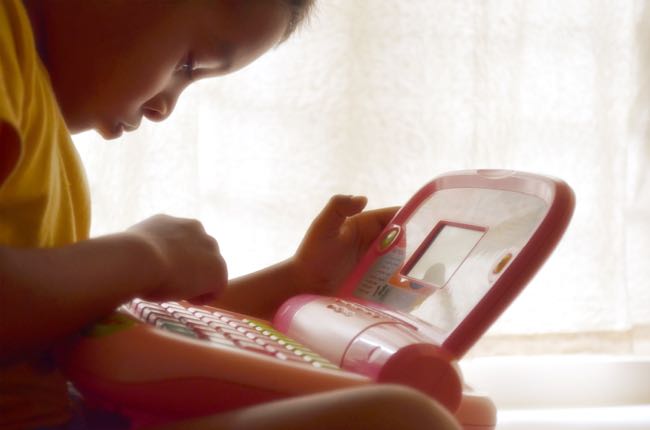
**Photography by: Jeshu John** (http://www.designerspics.com/photographs/kid-playing/)
-
Reinforce the idea of waiting one’s turn for what they want, of delaying gratification.
It’s easy to reinforce the idea of delayed gratification in other ways, too. For example, when your child is waiting in line to get on a theme park ride, discuss how important it is to wait one’s turn. By waiting patiently, they can earn something great and worthy of the time put in. This type of value system will carry over into their money-saving habits. -
Help children set purchasing and saving goals.
Have your child set a goal for something they want to purchase, like a card game or stuffed animal. (Just be careful that your child picks an item that won’t take them too long to save up for. A few months is a long time in a child’s mind and may be hard for them to grasp.)
Each week, check-in on their savings goal and see how it’s going. Once they have saved up enough to buy that first item, this will help reinforce the idea that savings lead to bigger and better things.
Photography by: Jeshu John (http://www.designerspics.com/photographs/note-pad-pencil-3/) -
Support children in small business endeavors.
Money lessons hit even harder with dollars that have been worked for. If a child has a money-making idea? Encourage it! Running a business, however small, teaches kids money management skills they’ll use for life. Let their inner entrepreneur come out through classic jobs like summer lemonade stands or winter hot chocolate booths. When they are helped to set up and achieve business goals, kids learn about pricing, making profits and mastering math skills. -
Open a checking or savings account for your child.
You may not think opening a child’s checking or savings account is necessary. However, it’s important to know that banks and credit unions are making that a viable option for kids. Your child could start building lifelong credit at as young as 10 years old. By having an account in which they deposit, save money and experience earnings, by the time they’re older, managing a credit card will be an easy transition. -
As kids get older, teach them about compound interest.
As a follow up to #8, teach your kids how compound interest works, especially if they now have their own bank account. Put them on a website like Investor.gov where they can experiment with investing options and real, concrete numbers. For example, they can find out that if they put in $100 at age 13, they could have $___ by age 65. This makes spending real and teaches children money management skills.
Photography by: Jeshu John http://www.designerspics.com/photographs/laptop-2/ -
Start talking college finances by freshman year of high school.
Whether your kids are going to be financing part or most of their college cost, it’s important to have them prepared when applying to schools. They need to know what’s realistic or what amounts will lead them to debt. As your kids get closer to junior year college applications, introduce them to tools like College Scorecard. This is a site that compares important university factors such as costs, employment rates post-graduates and the estimated amount for student loans. -
Get your child their first credit card and train them on how to use it properly.
For emergencies and building credit early, a credit card is an invaluable tool. However, that’s only if you’re able to pay off the amount charged. Teach your child money management by showing them how to only spend as much as they can pay off, with some leftover savings, course.


To learn more? We suggest invaluable reading material such as Neale Godfrey’s Money Still Doesn’t Grow on Trees: A Parent’s Guide to Raising Financially Responsible Children.
*Featured Image Credit Goes to Jeshu John: http://www.designerspics.com/photographs/kid-studying-beanbag/*


